Ready for China? Because It’s Ready for You!
Spicy hot pot, ancient imperial palaces, giant pandas, drone shows that’ll make your jaw drop—here’s what a China trip with EF Ultimate Break really looks like.

China is one of those places that sounds almost too big to wrap your head around. Thousands of years of history. A billion-plus people. Cities so futuristic they look like they look straight out of Blade Runner. And then, a panda bear just sitting there munching on bamboo. The scale of it is impossible to wrap your mind around until you’re actually there.
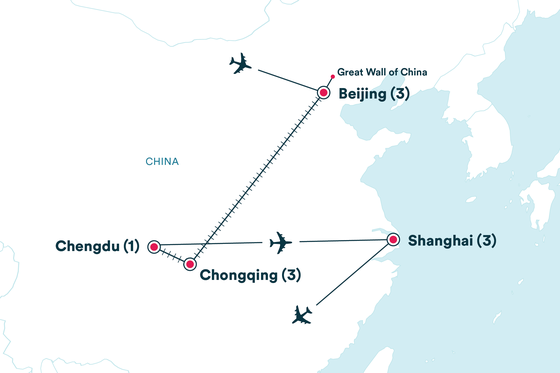
EF Ultimate Break’s China trips—China Quest: Ancient Wonders & Modern Marvels and New Year’s in China: Ancient Wonders & Modern Marvels—cover four cities in 12 days: Beijing, Chongqing, Chengdu, and Shanghai. That’s a lot of ground, and a lot of everything. Here’s a look at what you’ll actually do, eat, and experience along the way.

The Forbidden City, Beijing
Beijing
Your trip starts in Beijing, China’s capital and one of the world’s largest cities, with over 20 million people and more than 3,000 years of history packed into it. The first full day is a guided city tour that takes you through two of the most iconic sites in the world.
First up: Tiananmen Square, one of the largest public squares on the planet and a place that’s witnessed centuries of imperial parades, political drama, and cultural transformation. Then you walk into the Forbidden City—a sprawling palace complex that housed 24 emperors across the Ming and Qing dynasties. It’s called “forbidden” because only royals and select officials were allowed inside. You’re not royalty, but you’re in. Keep an eye out for the 50,000+ dragons carved into the walls and rooftops. Less decoration, more power statement.
In the evening, you’ll have your Welcome Dinner with a local hutong family. Hutongs are Beijing’s narrow, winding alleyways—historic neighborhoods that have been home to ordinary Beijingers for centuries. Eating a home-cooked meal with a local family, then grabbing a post-dinner drink in the photogenic Houhai hutong area, is the kind of cultural immersion that no museum exhibit can replicate.

The Great Wall of China
The Great Wall of China
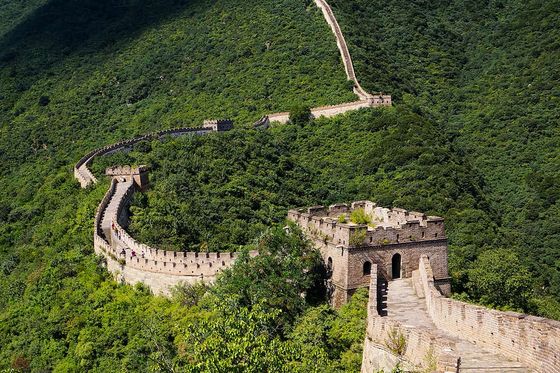
Day four is huge. Visiting the Great Wall of China is an experience that sounds incredible on paper and somehow still exceeds expectations irl. You’ll head to the Mutianyu section—one of the best-preserved and most scenic stretches of the wall—taking a cable car up and walking along ancient fortifications that snake across dramatic mountain ridges.
The Great Wall took over 2,000 years to build and stretches more than 13,000 miles. Standing on it, looking out at the mountains rolling in every direction, is a moment that tends to stay with people. It’s one of those places where you stop taking photos for a second and just...look.

Hongya Cave, Chongqing
Chongqing
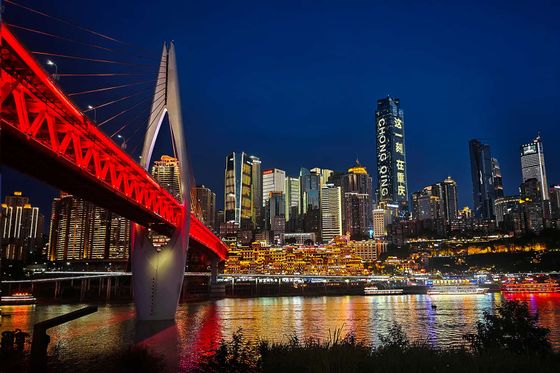
After Beijing, you’ll hop on a high-speed bullet train to Chongqing—a megacity of over 30 million people built into steep mountains where the Yangtze and Jialing Rivers meet. If Beijing is ancient history, Chongqing is the future, and it is a lot.
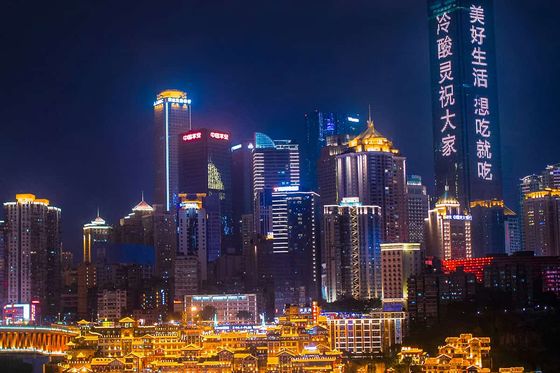
The city is famous for its “8D” infrastructure: bridges stacked on bridges, a monorail that passes through the middle of a 19-story apartment building (the residents can’t even hear it—engineers designed it that way), and neon-lit skyscrapers that reflect off the rivers below. On your first night, you’ll catch the Chongqing drone show—hundreds of synchronized drones creating massive aerial displays against the city skyline. It’s gone viral for a reason.
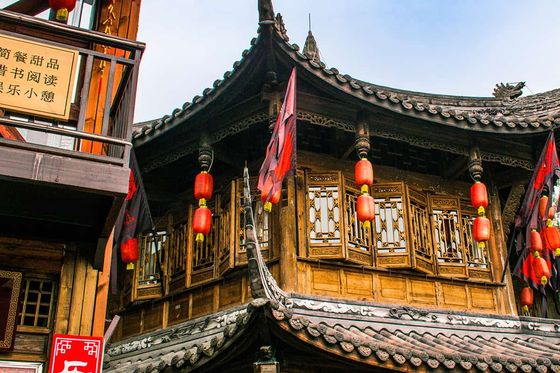
The guided city tour takes you to Hongya Cave, an 11-story, 2,300-year-old stilt house full of shops and restaurants that looks like it was lifted straight out of Spirited Away. You’ll also ride the Yangtze River cable car for panoramic views of the mountains and skyline. And yes, you should absolutely get the hot pot. Chongqing is famous for it, and the Sichuan spice here does not mess around.
If you’re on the New Year’s version of this trip, you’ll count down to midnight Chongqing-style: fireworks, lasers, and skyscrapers reflected on the rivers below. It’s a pretty solid way to start a year.

Pandas at Chendgu's Research Base of Giant Panda Breeding
Chengdu
After Chongqing’s sensory overload, Chengdu is a welcome reset. The capital of Sichuan province moves at a slower pace—teahouses, mahjong games in the park, jasmine tea, and a general vibe that invites you to take a breath.
And then...there are the pandas. Chengdu is the panda capital of the world, and a morning visit to the Research Base of Giant Panda Breeding is one of the highlights of the whole trip (and maybe your life?). You’ll watch giant pandas eat bamboo, nap, and generally be adorable, while learning about the conservation programs working to protect them. You’ll also see red pandas, which are smaller, fluffier, and just as cute than their famous cousins.

Pudong skyline in Shanghai from the Bund waterfront
Shanghai
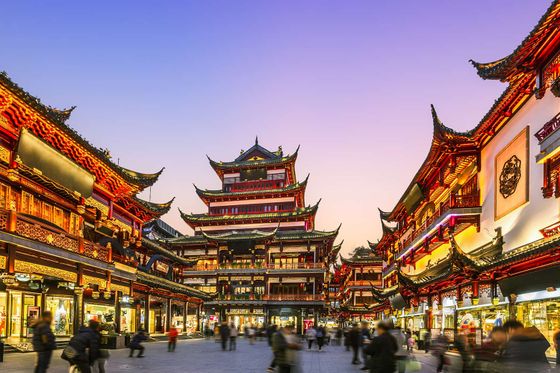
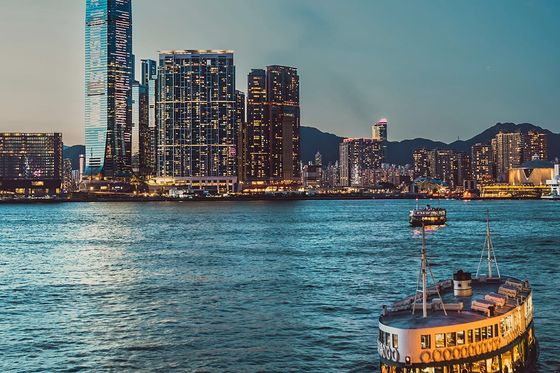
Shanghai is the last stop, a massive, fast-moving, city that’s full of contrasts like European colonial architecture along the Bund waterfront facing off against Pudong’s futuristic skyline across the river. You’ll explore Yu Garden, a stunning 400-year-old classical Chinese garden tucked into the middle of the city, and stroll Nanjing Road, Shanghai’s legendary pedestrian street. There’s also a local snack tasting featuring Shanghai specialties, which is a solid excuse to try xiao long bao (soup dumplings) if you haven’t already. There’s a technique to eating them. Ask your Tour Director.
The Bund is worth a slow walk at night when the skyline lights up. The Shanghai Tower has the world’s fastest elevator—118 floors in under a minute. The French Concession is perfect for wandering. And the Metro is the longest in the world, so getting around is easy and cheap.
Why go to China with Ultimate Break?
China is an incredible destination, but it’s also one that benefits hugely from having someone who knows what they’re doing. Your Tour Director is with you for the entire 12 days, handling logistics, sharing local knowledge, and making sure you actually get to experience the places you came to see—not just look at them from a bus window.
Everything is taken care of: hotels, transportation between cities (including those high-speed trains), guided tours, daily breakfast, and two included dinners. You can also add flights through EF and roll everything into an interest-free payment plan, which makes the whole thing a lot more manageable financially. And with 24/7 support available throughout the trip, you’re never on your own if something comes up.
Over 60% of EF Ultimate Break travelers book solo, and China is a trip where that group dynamic really matters. You’re sharing these experiences—the Great Wall, the drone show, the panda base, the hot pot—with a group of people who are your age and equally excited to be there. Those shared moments have a way of turning strangers into people you’re still texting months later.
China is a place that shifts your perspective. It’s too big, too old, too layered, and too alive to leave you exactly the same as when you arrived. Twelve days isn’t enough to see all of it—but it’s more than enough to fall completely in love with it.
Key takeaways
EF Ultimate Break’s China trips cover four cities in 12 days: Beijing, Chongqing, Chengdu, and Shanghai—giving you a real cross-section of ancient history, modern megacity life, and everything in between.
Visiting the Great Wall of China at the Mutianyu section is one of the most iconic experiences on the itinerary—you’ll take a cable car up and walk along one of the best-preserved stretches of the wall.
Chongqing is unlike any city you’ve been to—a 30-million-person megacity built into mountains, famous for its viral drone show, Sichuan hot pot, and infrastructure that genuinely defies logic.
Chengdu is the panda capital of the world, and Shanghai wraps up the trip with 400-year-old gardens, world-class dumplings, and an iconic skyline.
EF Ultimate Break handles all the logistics—hotels, transportation, guided tours, daily breakfast, and two dinners—so you can focus on actually experiencing China, not planning it.
Know before you go
Your most-asked questions about traveling to China with EF Ultimate Break.


)