)
Traveling to Morocco with EF Ultimate Break
Morocco: ancient medinas, endless desert, and a culture unlike anywhere else
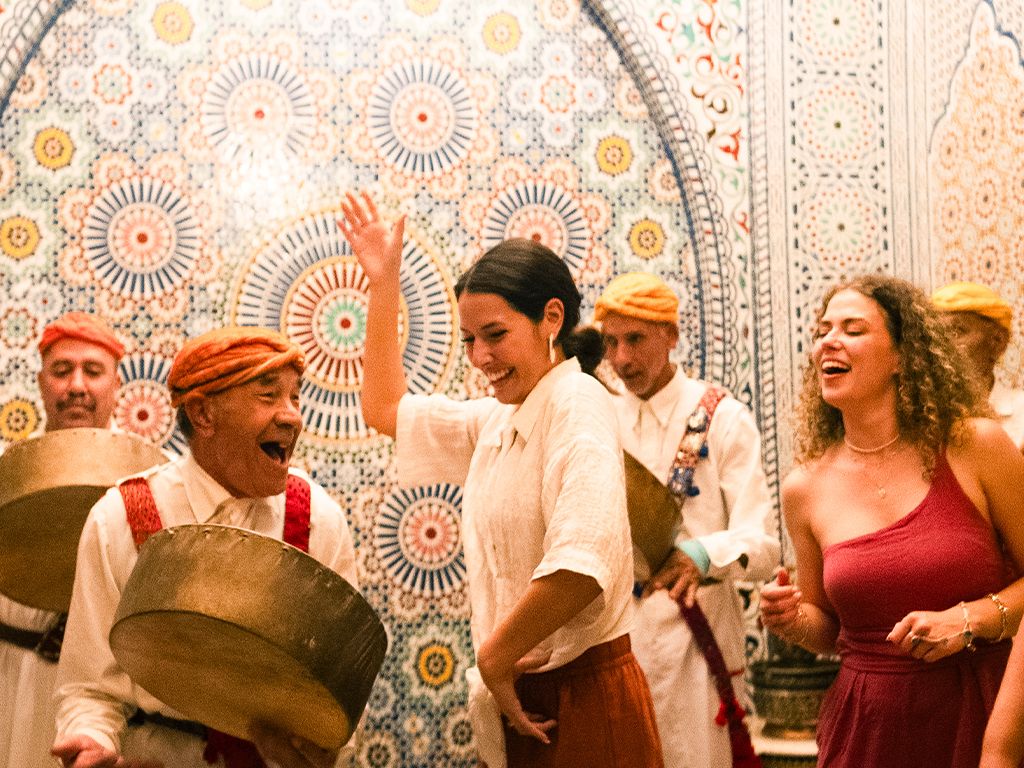
A country that defies easy description: Morocco is the product of centuries of cultural layering—traditional Islamic life, indigenous Berber traditions, and the remnants of Spanish and French colonialism all woven together into something completely its own. You’ll feel it in the architecture, taste it in the food, and hear it in the call to prayer echoing across a city that’s been standing for over a thousand years.
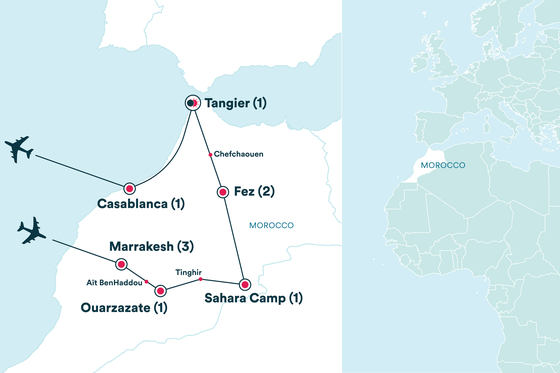
Cities that pull you in and don’t let go: Marrakesh is loud, colorful, and completely intoxicating. Fez is older than most countries and still feels alive in every alleyway. Chefchaouen is painted entirely in shades of blue and tucked into the Rif Mountains. Each city on this trip has its own personality, and none of them are anything like what you’ve seen before.
The Sahara, for real: Sleeping in a desert camp under a sky full of stars, waking up for sunrise over the dunes, and racing through the Erg Chebbi sand dunes in a 4x4 are the kinds of experiences that don’t translate well into words or photos. You just have to be there.
Food, markets, and making things with your hands: Moroccan food is fragrant, generous, and deeply tied to the culture around it. The souks are an experience in themselves. And if you want to go deeper, a cooking class will have you making tagine and couscous from scratch.

Language
Morocco’s official languages are Arabic and Amazigh (Berber), and French is widely spoken in cities and tourist areas. In northern Morocco, Spanish is also common. English is increasingly understood in major destinations, but learning a few words in Darija—Moroccan Arabic—goes a long way and will earn you genuine warmth from locals.

Currency & tipping culture
Morocco uses the Moroccan Dirham (MAD). Cash is king here, especially in souks, smaller restaurants, and local cafes. Credit cards are accepted at larger hotels and some restaurants, but having dirhams on hand makes daily life much easier. Tipping is expected and appreciated across most service interactions.
- Money: Coins: 1, 2, 5, 10 dirhams. Bills: 20, 50, 100, 200 dirhams.
- Credit and debit cards are accepted at larger hotels and some restaurants. For souks, street food, and local cafes, cash is essential.
- ATMs are available in cities and larger towns. Notify your bank before traveling to avoid blocked transactions.
Tipping tips:
- Restaurants: 10% is a generous and appreciated gesture. In smaller local spots, rounding up is fine.
- Cafes and street food: Rounding up or leaving small change is a kind gesture.
- Taxis: Agree on a price before you get in, or make sure the meter is running. Rounding up at the end is standard.
- Hotels: A few dirhams per bag for porters and per day for housekeeping is appreciated.
- Local guides: 50–100 MAD per person for a half or full day is a respectful and welcome gesture.
- Souk vendors: Tipping doesn’t apply here, but bargaining does. It’s expected, it’s part of the culture, and it’s genuinely fun once you get the hang of it.
Transportation
Getting around Morocco is pretty simple and straightforward. Here’s what the country’s transport landscape looks like more broadly.

The most luxe way to get around. Morocco’s intercity roads pass through some of the most dramatic scenery in North Africa—the High Atlas Mountains, the Ziz River Valley, and the desert plains approaching the Sahara. The views out the window are half the experience.

Excursions through the Sahara Desert are best explored by a 4x4. You can rent one and race through the Erg Chebbi dunes.

Two types exist in Morocco—petit taxis (small, for short trips within a city) and grand taxis (larger, for longer distances). Always agree on a price before you get in.

Morocco’s medinas are best explored on foot. They’re also not designed for vehicles, so in many cases walking is the only option. Wear comfortable shoes and embrace getting a little lost.

Morocco has a reliable national rail network connecting major cities like Casablanca, Rabat, Fez, and Marrakesh.

Morocco’s iconic destinations
From the red walls of Marrakesh to the blue streets of Chefchaouen, these are the places that make a Morocco bucket list worth every penny.


Can’t-miss experiences in Morocco
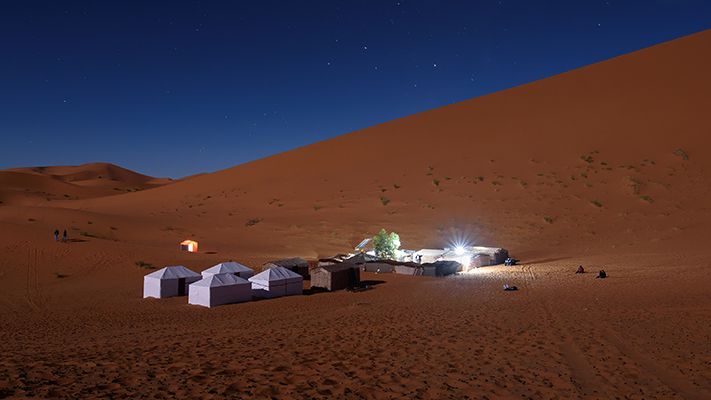
Sleep under the stars in the Sahara Desert
A night in a traditional desert camp in the Erg Chebbi dunes is one of those experiences that’s genuinely hard to put into words. Dinner by the fire, live music, a sky so full of stars it doesn’t look real, and sunrise over the dunes the next morning. This is the one you’ll be telling people about for years.

Get lost in the souk
Marrakesh market is a full sensory experience—spices, textiles, leather goods, ceramics, street food, and the constant hum of a city that never really slows down.

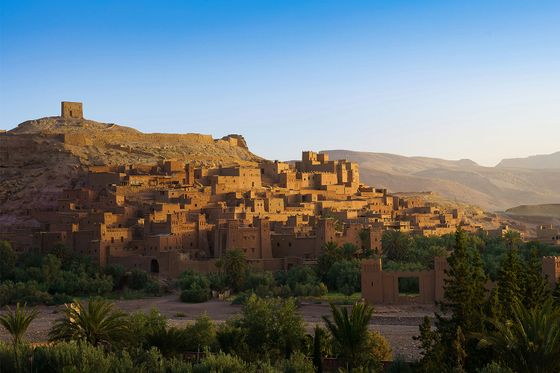
Explore Aït-Ben-Haddou
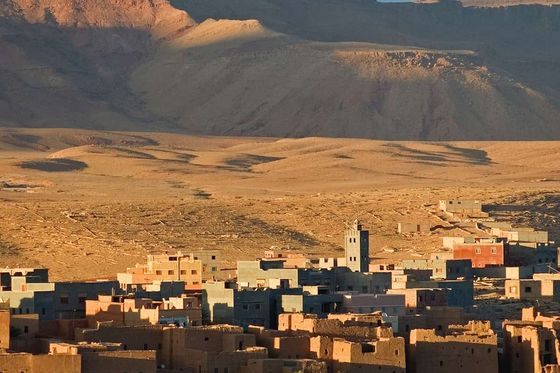
Walk through one of the best-preserved ksars in Morocco, a UNESCO World Heritage Site that has served as the backdrop for some of the most iconic films and TV shows ever made.

Wander the blue medina
Every street, every wall, every staircase in Chefchaouen is painted in a different shade of blue. It’s one of the most visually striking places in the world.

Visit the Fez tanneries
The Chouara Tannery is one of the oldest in the world, and watching the leather-dyeing process from the terraces above it is one of those only-in-Morocco moments. Fair warning: the smell is part of the experience. The mint they hand you at the entrance is not decorative.

Cook Moroccan dishes
In a beautiful, art-filled setting in Marrakesh, you’ll learn to make traditional Moroccan dishes from scratch. Tagine, couscous, and more—then sit down and eat what you made.

Ride a 4x4
Catch a sunrise in the Sahara, then race across the Erg Chebbi dunes in a 4x4.

Marvel at Bahia Palace
One of the finest examples of Moroccan architecture in the country. It features over 150 rooms of intricate tilework, carved cedar ceilings, and lush interior gardens.

Tour the Hassan II Mosque
One of the largest in the world, this mosque in Casablanca is built on a platform that extends over the Atlantic Ocean and it’s minaret is the tallest religious structure on Earth.
What’s the weather like in Morocco?

March–May
Spring is the sweet spot for Morocco. Temperatures are warm but not harsh, the landscapes are green from winter rains, and the crowds haven’t hit their summer peak. It’s the best time to visit Marrakesh, Fez, and the desert.

September–November
Fall brings comfortable temperatures, thinner crowds, and a slightly more relaxed pace across the country. The desert is particularly beautiful in October and November, when the heat has eased and the dunes glow in the softer autumn light.

June–August
Morocco in summer is hot—very hot, especially in Marrakesh and the desert, where temperatures can exceed 100°F. That said, the coastal cities of Tangier and Casablanca are more manageable, and the country has a lively, festive energy in summer.
When is the cheapest time to visit Morocco?
If you’re looking to experience Morocco without peak-season prices, here’s when you’ll find the best value.
What to eat in Morocco?
Moroccan food is fragrant and deeply tied to the culture around it. Meals are built around slow-cooked stews, freshly baked bread, and spice combinations that have been refined over centuries. Street food is everywhere and always worth stopping for—and the mint tea is non-negotiable.
Safety in Morocco
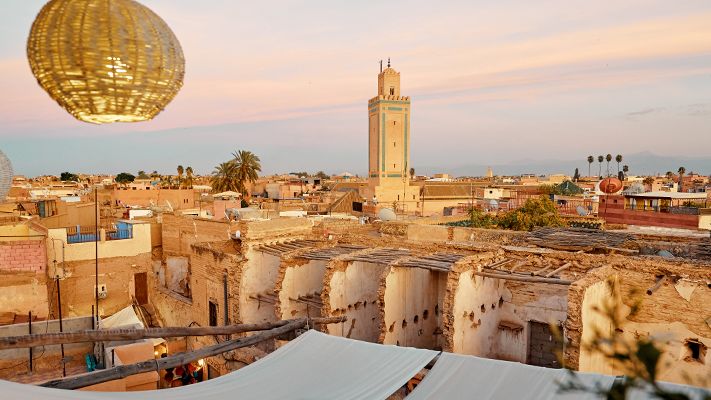
Morocco is a welcoming and well-traveled destination that receives millions of visitors each year. Violent crime against tourists is rare, and the country has a well-developed tourism infrastructure.
That said, a few things are worth knowing before you go. The medinas of Marrakesh and Fez can be disorienting—that’s part of what makes them great, but it also means keeping your belongings close and staying aware of your surroundings in crowded areas. Unsolicited “guides” offering to show you around are common in tourist areas; a polite but firm “no thank you” is all you need.
Note: Morocco’s sun is strong, particularly in the desert and during summer months. Sunscreen, a hat, and staying hydrated are essential. Tap water is not safe to drink in Morocco—stick to bottled water throughout your trip.
Your safety is our top priority
Traveling with EF Ultimate Break means you’re not exploring Morocco alone—you’ve got a full support system making sure you feel comfortable, informed, and protected every step of the way.
Traveler photos from Morocco
Morocco travel reviews
Our travelers love visiting Morocco, and they aren’t afraid to tell us.