The Pyramids Hit Different in Person: Here’s Why You Need to Go
Standing at the base of the Great Pyramid, you’ll realize no photo, documentary, or history class could’ve prepared you for this moment.

You’ve seen them in textbooks, on documentaries, and scrolling through your feed at 2 am. But here’s the thing about the Pyramids of Giza: they don’t translate through a screen. These aren’t just old buildings or tourist attractions you check off a list. They’re 4,500-year-old mysteries that somehow still stand, still stun, and still make you question everything you thought you knew about ancient civilizations.
When you’re standing in front of the Great Pyramid—all 481 feet of it—your brain does this weird thing where it tries to process the scale, the age, and the sheer impossibility of it all at once. How did they build this without cranes? Without computers? Without even the wheel being widely used? The answer is: we still don’t entirely know. And honestly, that’s part of the magic.
If you’ve been waiting for a sign to finally see the Pyramids in person, this is it. Here’s why a day at the Pyramids with EF Ultimate Break should be at the top of your travel bucket list.

Trekking through the desert to see the Great Pyramid of Giza in Egypt
They’re older than you can actually comprehend
Let’s put this in perspective: the Pyramids were already ancient when Cleopatra was alive. In fact, Cleopatra lived closer to the invention of the iPhone than to the construction of the Great Pyramid. Wild, right?
The Great Pyramid of Khufu was built around 2560 BCE, making it over 4,500 years old. For nearly 4,000 years, it was the tallest human-made structure in the world. Think about that. Empires rose and fell, entire civilizations came and went, and these pyramids just…stood there. Unbothered.
When you visit with EF Ultimate Break, you’re not just seeing a landmark—you’re standing in front of one of the Seven Wonders of the Ancient World. And it’s the only one still standing. That alone makes the trip worth it.

The pyramids of Egypt are definitely photogenic
The scale is unreal (and so are the photo ops)
No amount of scrolling through Instagram can prepare you for the actual size of these things. The Great Pyramid alone is made up of approximately 2.3 million stone blocks, each weighing between 2.5 and 15 tons. That’s roughly 6 million tons of stone, stacked with precision that modern engineers still marvel at.
Standing at the base, craning your neck to see the top, you’ll feel impossibly small—in the best way. It’s humbling. It’s awe-inspiring. And yes, it makes for some seriously epic photos. Whether you’re doing the classic “holding up the pyramid” pose or capturing the golden hour glow across the Giza Plateau, your camera roll is about to get a major upgrade.
And let’s be real: the Sphinx is right there too. You know, that massive limestone statue with the body of a lion and the head of a pharaoh that’s been staring out over the desert for millennia. It’s smaller than you’d expect but way more powerful in person. The weathered face, the missing nose (still a mystery), the sheer presence—it’s the kind of thing that makes you stop talking and just… look.
You’ll actually get to go inside
Here’s where it gets even cooler: you can go inside the Great Pyramid. Yes, inside. The narrow passageways and chambers that were built thousands of years ago are still accessible, and walking through them is like stepping into a time machine.
It’s not for the claustrophobic—the tunnels are tight, steep, and dimly lit—but if you can handle it, it’s one of the most surreal experiences you’ll ever have. You’ll crouch through the Grand Gallery, a massive ascending corridor with a corbelled ceiling that’s an architectural feat in itself. Then you’ll reach the King’s Chamber, a granite room that once held the sarcophagus of Pharaoh Khufu.

Seeing hieroglyphics up close in Egypt is a MUST
The history is fascinating (and full of mysteries)
The Pyramids weren’t just tombs—they were statements. Monuments to power, legacy, and the belief in an afterlife. The ancient Egyptians believed that the pharaohs were gods on Earth, and when they died, they needed a proper resting place to ensure their journey to the afterlife. Hence, the pyramids.
But how they actually built them? That’s where things get interesting. Theories range from massive ramps to internal ramps to levers and counterweights. Some people think it was advanced ancient technology. Others believe it was just incredible organization, manpower, and ingenuity. The truth is, we’re still piecing it together.
What we do know is that it took around 20 years and an estimated 100,000 workers to build the Great Pyramid. These were skilled laborers, many of whom were paid in food and housed in workers’ villages nearby. Archaeologists have even found evidence of medical care and proper burials for these workers, which tells us they were valued members of society.

The iconic Sphinx of Egypt
A day at the Pyramids with EF Ultimate Break
So, what does a day at the Pyramids actually look like? With EF Ultimate Break, it’s a mix of guided exploration, free time, and those pinch-me moments that make travel so addictive.
You’ll start early to beat the crowds and the heat (because yes, the Egyptian sun is no joke). Your Tour Director will lead you through the Giza Plateau, giving you the rundown on the history, the architecture, and the legends. You’ll visit all three pyramids—Khufu, Khafre, and Menkaure—each with its own story and significance.
Then there’s the Sphinx, where you’ll learn about its construction, its purpose, and the theories about what happened to its nose. You’ll have time to explore, take photos, and soak it all in.
If you’re up for it, you can opt to go inside the Great Pyramid or visit the Solar Boat Museum, where a full-size ancient Egyptian boat—meant to carry the pharaoh into the afterlife—is on display. It’s one of the oldest and largest wooden boats ever discovered, and it’s remarkably well-preserved.
And because EF Ultimate Break knows that travel is about more than just sightseeing, you’ll also have time to connect with your group, swap stories, and maybe grab a fresh mango juice from a nearby vendor. It’s the little moments—laughing with new friends, watching the sun set over the desert, feeling the sand under your feet—that make the day unforgettable.

The pyramids of Egypt are photogenic pt. 2
Why the Pyramids deserve a spot on your bucket list
The Pyramids of Giza aren’t just a destination. They’re a reminder of what humans are capable of when we dream big and work together. They’re proof that some things are worth preserving, worth protecting, and worth traveling halfway around the world to see.
You’ll leave with more than just photos. You’ll leave with a deeper appreciation for history, a sense of wonder, and maybe a few existential thoughts about time, legacy, and what it means to create something that lasts. And honestly? That’s the kind of travel that changes you.
So if you’ve been scrolling, dreaming, and wondering if the Pyramids are worth it—they are. Book the trip. Stand in the shadow of the Great Pyramid. Walk through chambers built before recorded history. And let yourself be awed by one of the most incredible places on Earth.
The Pyramids have been waiting for thousands of years. They’ll wait a little longer—but why should you?
Key takeaways
The Pyramids of Giza are over 4,500 years old and represent the only surviving Wonder of the Ancient World, offering a tangible connection to one of history’s most advanced civilizations and a chance to witness architectural feats that still baffle modern engineers.
You can actually go inside the Great Pyramid and explore the narrow passageways and chambers where pharaohs were laid to rest, making this more than just a photo op—it’s a hands-on journey through ancient history.
EF Ultimate Break’s expert-guided tours provide historical context, skip-the-line access, and the perfect balance of structured exploration and free time, so you can experience the Pyramids without the stress of planning or navigating crowds on your own.
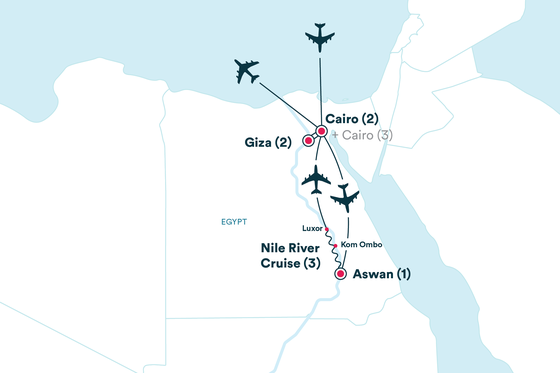
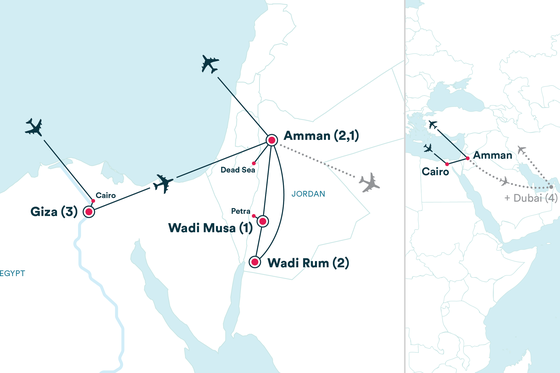
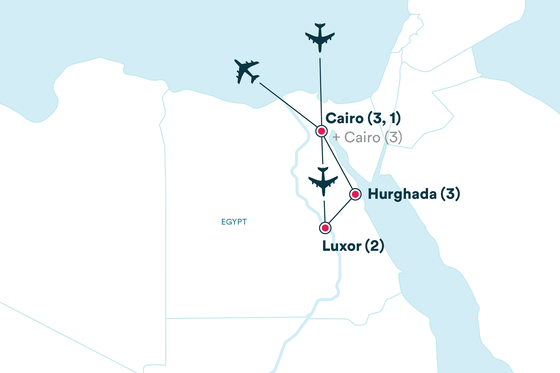
The Pyramids are part of a larger Egyptian adventure that includes the Sphinx, the Solar Boat Museum, and depending on your itinerary, experiences like Nile cruises, Luxor temples, and Red Sea diving, making it a comprehensive cultural immersion.
Know before you go
Your most-asked questions about visiting the Pyramids of Giza.


)