Italy for first-timers: why it’s the perfect solo travel destination
Italy has a way of making everything feel like a movie—and going solo just means you get to write the whole script yourself.

You’ve been thinking about it for a while. Maybe you’ve saved a few Reels of someone making pasta in Rome, or you’ve had “trip to Italy” sitting in your Pinterest manifestation board for longer than you’d like to admit. Here’s the thing: there’s never going to be a perfect moment to go. There’s just the moment you decide to stop waiting.
And if you’re going to take the leap on your first big solo trip, Italy is one of the best places to do it. It’s got the kind of variety that makes every type of traveler feel at home—ancient ruins, world-class art, incredible food, coastline, canals, and a culture that genuinely invites you to slow down and enjoy it all. It’s also one of the most well-traveled destinations in the world, which means it’s accessible, navigable, and full of people who have done exactly what you’re about to do.
Here’s what you need to know before you go.

Taking a solo moment to soak in the grandeur of the Colosseum in Rome
Is Italy a good destination for first-time solo travelers?
Short answer: yes.
Italy has the infrastructure for it. Major cities like Venice, Florence, and Rome are set up for tourism in a way that makes getting around relatively straightforward—even if you don’t speak a word of Italian. Signs are often bilingual, locals in tourist areas are used to helping visitors, and the country’s train system connects cities efficiently.
But more than logistics, Italy just has an energy that’s welcoming. Sit down at a cafe and the barista will probably chat with you. Wander into a neighborhood trattoria and you might end up learning the story behind the family recipe. The country has a culture of hospitality that makes solo travel feel less lonely and more like an open invitation.
That said, navigating a new country alone—especially for the first time—can still feel overwhelming. That’s exactly where traveling with EF Ultimate Break changes the game. Instead of spending hours researching which neighborhoods are safe, which trains to book, or how to get from the airport to your hotel, all of that is handled for you. You show up, your Tour Director is waiting, and the trip begins. The planning is done. The only thing left is to actually experience it.

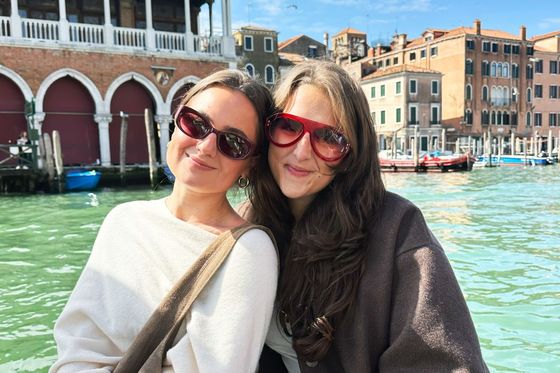
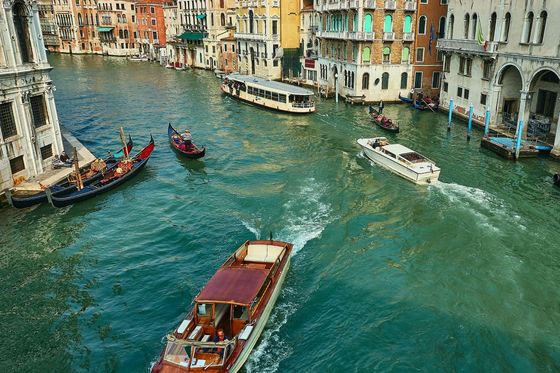
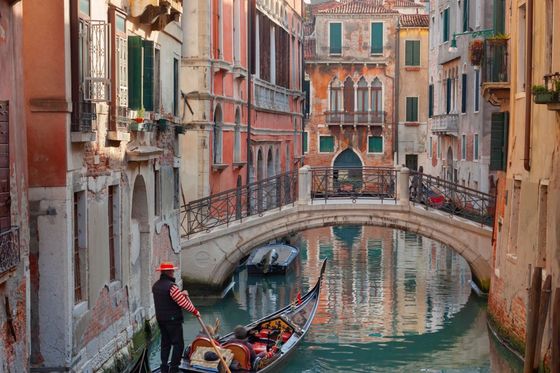
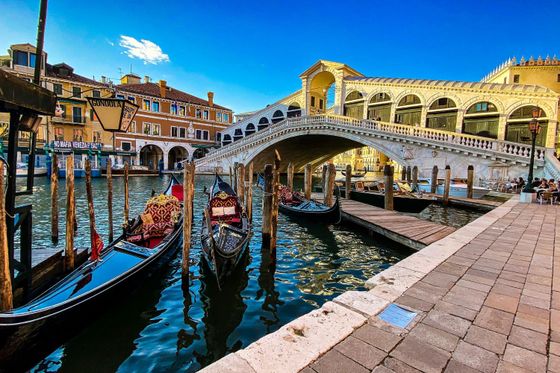
Cruising through the canals of Venice, Italy on a water taxi
Which cities should you visit in Italy on a first trip?
If it’s your first time in Italy, the classic trio of Venice, Florence, and Rome is the move. Each city is completely different from the others, and together they give you a full picture of what makes Italy so special.
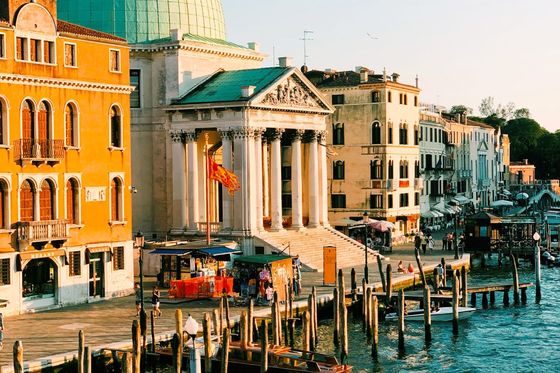
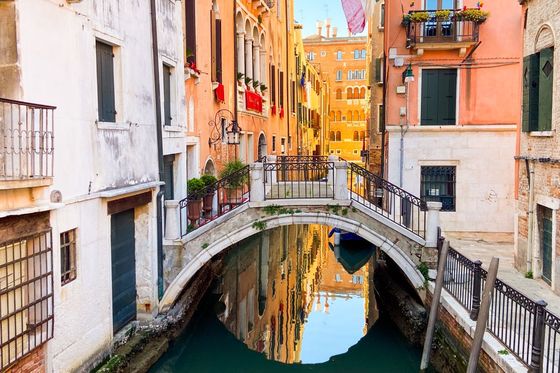
Venice is unlike anywhere else on earth. Built on 118 islands and connected by more than 400 bridges, it’s a city you have to see to believe. Wander through the narrow streets (called calli) and you’ll stumble onto something unexpected around every corner—a canal view, a centuries-old church, a bakery with a line out the door. The EF Ultimate Break Venice, Florence & Rome tour takes you through St. Mark’s Square, past the Bridge of Sighs, and into the workshop of master glassblowers at Vecchia Murano, where you can watch molten glass get shaped into something extraordinary right in front of you. It’s also a great city for solo exploration—getting a little lost here is actually the point.
Florence is where art history stops being something you learned in school and starts being something you can actually feel. The Duomo dominates the skyline. The Uffizi holds some of the most important paintings in the world. And Michelangelo’s David is one of those things that genuinely stops you in your tracks. But Florence isn’t just about the big-ticket sights. It’s also about wandering the Oltrarno neighborhood, finding a rooftop bar with a view, and doing the wine window trail—a self-guided crawl through the city’s historic buchette del vino, tiny stone openings where wine has been served to passersby since the 1600s.
Rome is the kind of city that makes you feel the weight of history in a way that’s hard to describe. You’re walking past ruins that are 2,000 years old. You’re tossing a coin into the Trevi Fountain. You’re eating cacio e pepe in a neighborhood that hasn’t changed much in centuries. The EF Ultimate Break Rome: City Experience itinerary includes a guided tour of the Roman Forum—once the center of political and public life in the ancient world—along with time to explore on your own.

Sharing gelato and laughs on the banks of the Arno River in Florence, Italy
How to travel to Italy solo (without the stress)
The logistics of solo international travel can feel like a lot. Flights, transfers, hotels, currency, language barriers, figuring out what to do and when—it adds up fast. Here’s how to make it manageable.
Let someone else handle the planning. This is the biggest one. When you travel with EF Ultimate Break, your itinerary is built for you. Hotels, transportation between cities, guided tours, welcome and farewell dinners—it’s all included. You’re not spending your evenings researching train schedules or trying to figure out if your hotel is in a sketchy neighborhood. You’re spending them actually enjoying Italy.
Budget smartly. EF Ultimate Break recommends budgeting around $80–$100 per day for meals, tips, and personal spending beyond what’s included. The interest-free payment plan means you can pay for the trip over time rather than all at once, which makes the whole thing a lot more financially manageable.
Go solo, but don’t go alone. Over 60% of EF Ultimate Break travelers join trips solo. The group dynamic is genuinely one of the best parts—you show up not knowing anyone and leave with people you actually want to stay in touch with. The Welcome Dinner on night one is specifically designed to break the ice, and by the time you’re sharing a pasta-making class in Florence or watching the sun set over Rome, the “solo” part starts to feel like a technicality.
Trust your Tour Director. They’re not just there to keep the group on schedule—they’re a resource. Ask them where to eat, what to skip, how to get the best view, which optional excursions are worth it. They know Italy in a way that no TikTok or Reels can fully replicate.

Tossing a coin and making a wish at the Trevi Fountain in Rome, Italy
What makes Italy worth it as a first solo trip
There’s a version of Italy that exists in movies and travel content, and then there’s the version you actually experience when you’re there. The two aren’t that different—Italy really is that beautiful, the food really is that good, and the history really does hit differently when you’re standing in the middle of it.
But what makes it worth it as a first solo trip specifically is that it’s the kind of place that builds your confidence. You navigate a new city. You try to order in Italian and mostly succeed. You figure out the train system. You make friends with strangers over dinner. You realize that traveling alone doesn’t mean being alone—it means being open.
Italy has a way of doing that to people. It slows you down, opens you up, and sends you home with a full camera roll, a few new friends, and the very strong feeling that you need to come back.
So, if you’ve been waiting for a sign: this is it. Book the trip. The pasta is waiting.
Key takeaways
- Italy is one of the best destinations for first-time solo travelers—it’s accessible, well-connected, and has a culture of hospitality that makes it easy to feel at home even when you’re on your own.
- The classic trio of Venice, Florence, & Rome gives first-timers the full range of what Italy has to offer: canals and glassblowing, Renaissance art and wine windows, ancient ruins and the best pasta of your life.
- EF Ultimate Break takes care of all the logistics—hotels, transportation, guided tours, and more—so you can focus on actually experiencing Italy instead of stressing about the planning.
- Over 60% of EF Ultimate Break travelers join trips solo, and the built-in group dynamic makes it easy to meet people and build real connections along the way.
- Interest-free payment plans make the trip financially accessible, and budgeting around $80–$100 per day for personal spending keeps things manageable once you’re there.
Know before you go
Your most-asked questions about visiting the Pyramids of Giza.